

Overview: Authentication confirms who you are, while authorization decides what you can do. In backend work these two concerns shape every login flow, API check, and access decision. This article explains how to design secure authentication, issue and validate tokens, and enforce permissions across services. You'll see practical patterns and common mistakes from real projects. The guidance stays grounded in day‑to‑day backend work, not abstract theory.
01. Introduction
In backend work, authentication and authorization sit at the core of how we build secure services. Authentication answers the question: who is requesting the data? Authorization answers: what is this user allowed to do? Together they shape login flows, API checks, and access to resources. The practical takeaway is simple: separate identity verification from permission decisions, and design them to evolve together as your system grows.
For developers in Bengaluru's tech scene, this separation isn't just a classroom idea. It becomes visible in how teams structure services, how they audit access, and how they respond when a policy change happens. This article uses concrete examples from real projects to show practical patterns you can use on the next sprint. By the end you'll have a mental model you can apply to APIs, microservices, and front ends without getting lost in jargon.
As you read, you'll notice the emphasis on concrete work: how teams actually implement identity checks in cloud environments, how to plan for audits, and how to reason about security as a fundamental design decision. The goal is to help you move from classroom exercises to job‑ready habits-so you can design safer APIs, review access rules with confidence, and ship features with clear security ownership.
02. Why authentication and authorization matter separately in a backend project
Authentication is the gatekeeper. It answers who is at the door. In practice this means validating credentials or tokens and then linking that identity to something the system can rely on, such as a session or a bearer token. Authorization, by contrast, is the policy that decides what the authenticated user is allowed to do. It is about permissions, roles, and access to resources.
In real projects the separation is visible in how services are designed. A login service may issue a short‑lived token after validating credentials. A resource service uses that token to decide whether the request should be allowed. If you mix the two, you risk granting access too broadly or failing to revoke it when a role changes. The practical effect is a cleaner codebase where identity checks live in one module and permission checks live in another. That split makes testing easier and security easier to reason about.
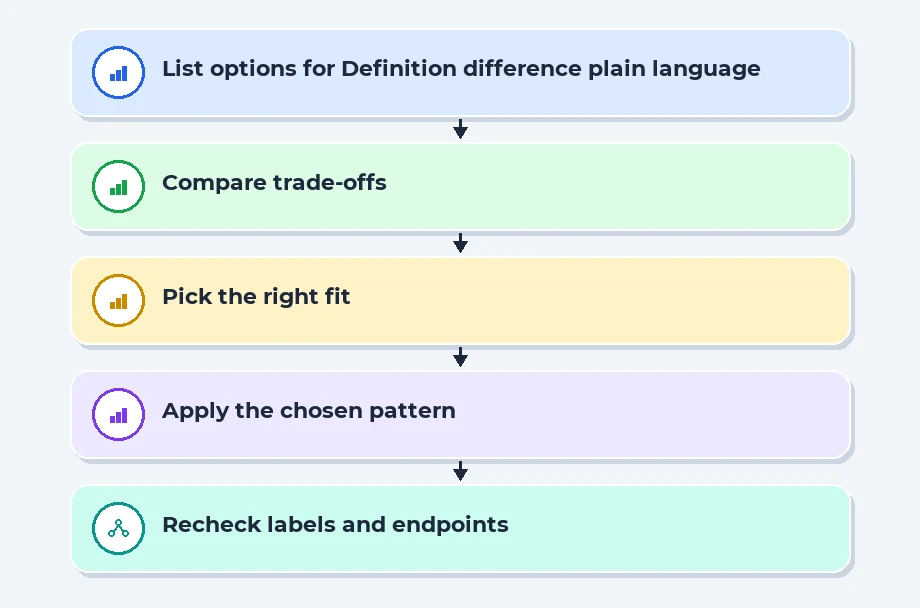
Definition difference in plain language
Think of authentication as the passport check. It confirms who you are. Think of authorization as the permit check. It confirms what places you can enter. When you design an API you want to separate these concerns so a fix in one place does not create a new hole elsewhere. This separation makes code easier to test and easier to secure in production.
In teams that release often you'll see a pattern emerge: authentication proves identity once and reuses that proof, while authorization performs ongoing checks that decide if a given action is allowed at that moment. This is not just theory; it shapes how you structure services, how you log events, and how you test security before releases.
Placement Clients


MSME Companies in UK & US
03. Designing a secure authentication flow for APIs
The flow starts by identifying who is requesting data and from where. Most modern backends rely on an identity provider to verify users and issue tokens that other services can trust. A solid flow includes clear token lifetimes, rotation, revocation, and auditable logs. It also requires careful handling of secrets and secure storage in production containers and cloud environments.
Step by step authentication flow for APIs
- User or service initiates authentication by presenting credentials or using an external identity provider.
- Identity provider issues a token after successful validation. The token is then presented to resource servers with requests.
- Resource server validates the token using a known key or JWKS and ensures it is not expired. If valid the request proceeds.
- Refresh tokens or rotation mechanisms are used to obtain new access tokens without re‑prompting the user. This reduces friction while maintaining security.
04. Choosing tokens, sessions, and API keys in practice
Token‑based flows scale well across distributed systems. Tokens can be short lived and carry claims that downstream services use to decide what a user can do. Sessions are more common in traditional web apps and some secure enterprise contexts. API keys are simple and easy to distribute to trusted clients but lack fine‑grained control unless you layer additional checks.
Choosing the right approach depends on the application, the threat model, and how you deploy. In a startup or fintech service you might rely on OAuth2 flows with short‑lived access tokens alongside refresh tokens, and use API keys for internal services. Regardless of the choice you must implement proper revocation, monitoring, and rotation and you must store secrets securely in a vault or KMS. This isn't optional in modern teams.
JWT vs opaque tokens
JWTs embed claims that downstream services can read without contacting the issuer. Opaque tokens hide their content and must be introspected by a token endpoint. Each approach has tradeoffs: JWTs reduce latency and enable offline checks but require careful key management and token revocation strategies. Opaque tokens improve security by hiding content but require network calls for validation, which can add latency in some architectures.
In practice you'll often see a hybrid: short‑lived JWTs for access tokens, with a separate refresh token lineage and a dedicated introspection point for certain sensitive tokens. The decision depends on your ecosystem, compliance needs, and performance constraints. Always document token semantics so developers understand what they can rely on and what to rotate when a credential changes.
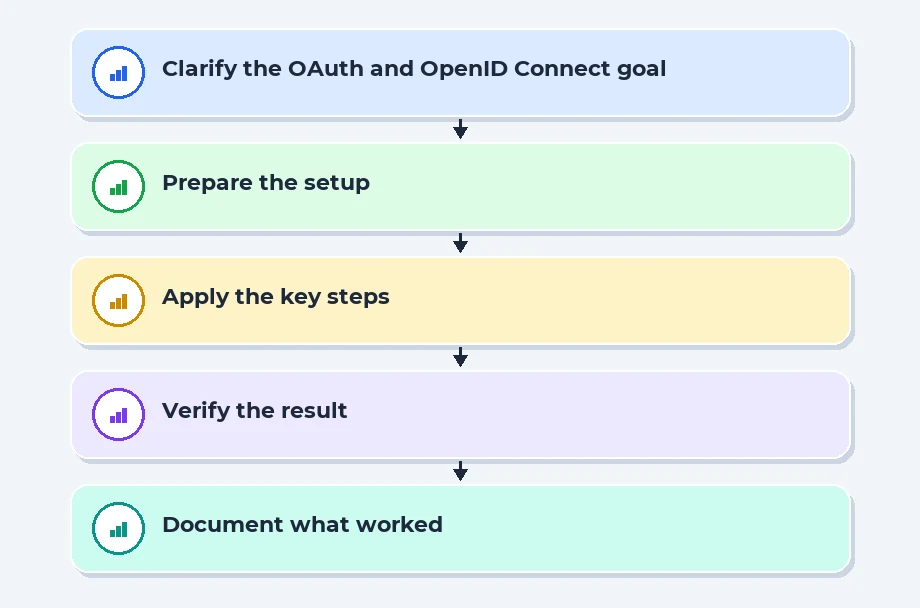
OAuth 2.0 and OpenID Connect in practice
OAuth 2.0 defines how a client can obtain access tokens. OpenID Connect adds identity information about the user. In modern backend systems you often see OAuth with JWTs as access tokens and ID tokens that convey identity. Implementations are complex, and you should rely on well‑tested libraries plus a trusted identity provider. In Bengaluru's teams you'll frequently see integration with enterprise identity providers to meet compliance needs while keeping the flow developer‑friendly.
05. Common mistakes and defenses in real projects
Teams often rush to ship features without security‑minded thinking. A common error is granting broad permissions during onboarding and never scaling them down as a project matures. Another frequent pitfall is storing tokens or credentials in logs or in code. These mistakes create long‑lasting risk that bites you later during audits or incidents.
Defenses are about disciplined habits that survive project changes. Regular audits, automated tests for access control, and clear ownership for policy decisions help. In practice that means threat modeling during design, reviewing access control rules during PRs, and embedding automated checks in CI pipelines. This is how teams in Bengaluru keep security solid while still delivering features quickly. The aim is to make security a feature, not a bottleneck.
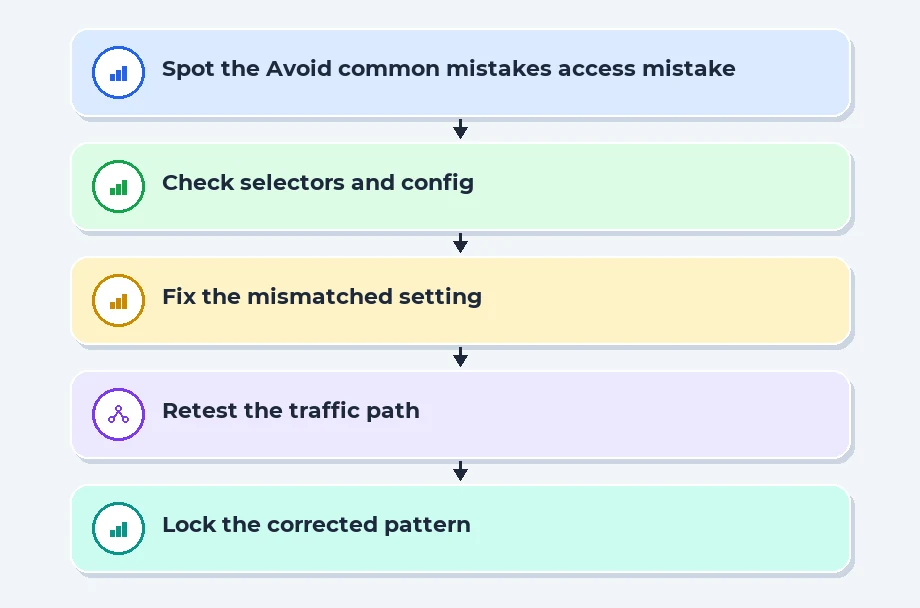
Avoid common mistakes in access control
- Define the minimum permissions needed for each role and resource. This is the principle of least privilege in action. It reduces the blast radius if an account is compromised.
- Store secrets in a dedicated vault or cloud KMS and rotate keys on a schedule. Make token revocation a standard operation and monitor for anomalies in usage.
- Separate authentication from authorization in code and tests. This makes it easier to update one without breaking the other.
Establish auditing and monitoring
Turn on audit logs and authorization checks. Use alerts for unusual access patterns and failed authentications. Auditing provides accountability and helps with incident response. In the real world you will need to explain why a denial occurred to a manager and you will want the logs to tell the story clearly.
| Feature | Token based | Session based | API key based |
|---|---|---|---|
| Statefulness | Stateless by design | Stateful on server side | Stateless |
| Revocation complexity | Revocation can be challenging with long lived tokens | Revocation simple via session invalidation | Revocation depends on key rotation |
| Scalability | High but requires key management | Low at scale due to server state | Simple scale out with token checks |
| Granularity of access | Fine grained via claims | Coarse grained by session | Coarse grained via API key |
Recent Job Descriptions

06. Authentication vs Authorization: What Backend Developers Must Know
Authentication and authorization are not the same thing. Authentication answers who you are; authorization answers what you're allowed to do. In backend development, treating them separately makes your API more predictable and your security easier to audit. When teams blur the line, failures become silent and hard to trace.
Typically a client presents credentials or a token. The API validates that token and then checks the requested action against the user's permissions. The common patterns include OAuth 2.0, OpenID Connect, and tokens such as JWTs or opaque references. Each pattern has its own trade-offs for visibility, revocation, and complexity.
That separation matters because it changes where you enforce rules and how you respond to failures. If you mix identity checks with access decisions, a small change in one place can open a door elsewhere. Clear boundaries help you rotate credentials, update roles, and support service-to-service calls without leaking data. It also makes auditing easier, because you can point to specific claims and permissions rather than blending logic.
In practice, aim for short-lived access tokens, paired with refresh tokens, and use explicit scopes or roles as your authorization currency. Validate token claims such as iss (issuer), aud (audience), and exp (expiration). If you're using JWTs, sign with a robust algorithm like RS256 and rotate keys regularly to limit the impact of a compromised key. Plan for token revocation strategies, and consider how you will respond if a token is leaked.
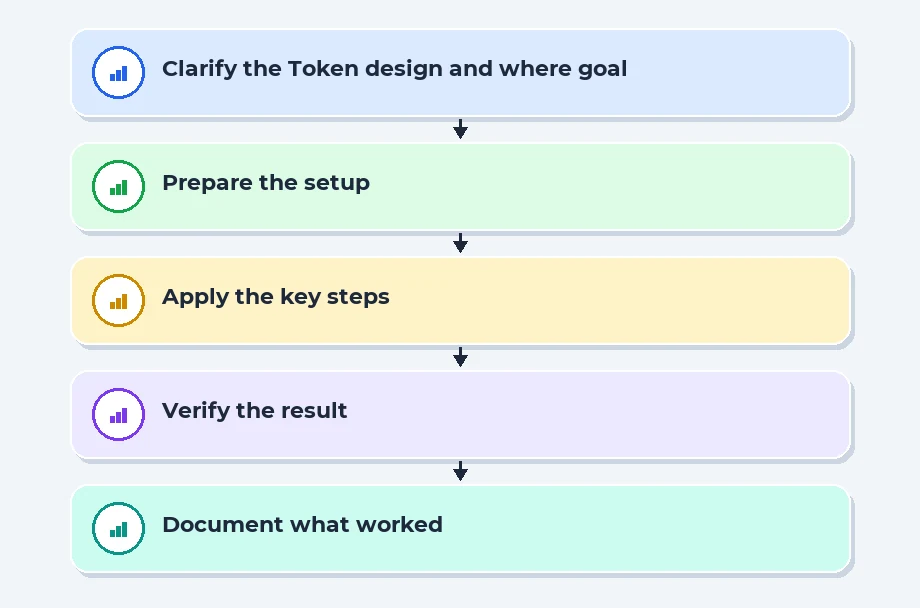
Token design and where to check them
You must decide where to perform checks: at an API gateway, in each microservice, or with a service mesh. Gateways centralize the heavy lifting and simplify client behavior, but you risk a single point of failure and larger blast radius if the gateway is breached. Service-level checks give you finer control and better fault isolation, at the cost of more implementation work and careful token propagation. In practice, many teams use a hybrid approach: validate at the edge for obvious exp and signature checks, then enforce fine-grained access inside services.
For JWTs, verify the signature against your public keys, ensure the token hasn't expired (exp) and is not used before (nbf). Check the audience (aud) to ensure the token was issued for your API and the issuer (iss) to trust the source. Map the token's scope or roles to the actions your code allows, and consider ABAC attributes if you need attribute-based decisions. If you use opaque tokens, perform remote introspection against the authorization server and cache results to avoid repeated latency, and design a robust key rollover and JWKS usage to keep signing keys fresh.
07. References
- OWASP Authentication Cheat Sheet
- NIST Digital Identity Guidelines SP 800-63-3
- OAuth 2.0 RFC 6749
- JSON Web Token RFC 7519
- MDN Web Authentication
08. Conclusion
Authentication and authorization are foundational for backend developers. By keeping identity verification separate from permission checks, you build systems that are easier to secure, audit, and adapt. This approach fits hands‑on learning paths and the project‑based culture you find in Bengaluru's tech ecosystem. For students and engineers, practicing real‑world workflows-designing a simple login, adding layered authorization, and then introducing monitoring-helps you move from classroom exercises to job readiness.
As you gain experience, you'll refine how you factor identity checks into service boundaries, how you model roles, and how you verify access in CI pipelines. The goal is to make security a natural part of how you design, deploy, and operate APIs. If you treat authentication and authorization as two sides of the same security coin, you'll be better prepared for audits, incidents, and the fast pace of modern backend work. This stance mirrors the practical, project‑driven ethos you'll find at Scoop Labs-focus on concrete outcomes, not buzzwords, and build skills you can carry into your first roles and beyond.
Navigate to Address
Scoop Labs
59, 2nd Floor, VLM Towers, 10th Cross Road, 2nd Stage, Padmanabha Nagar, Banashankari, Bengaluru, Karnataka 560070
Get Direction: Banashankari
Submit a Request
Recent Posts


