

Overview: Kubernetes Namespaces help teams organize workloads inside a shared cluster. This guide explains how namespaces create clean boundaries, support multi‑team work, and keep deployments predictable. You will learn practical patterns, governance, and daily workflows that use namespaces in real projects, including how they affect CI CD and security. The lessons are written for engineers in Banashankari and across Bangalore who work with cloud computing and container orchestration.
01. Introduction
In modern software delivery a single Kubernetes cluster often hosts dozens of teams and many environments. Namespaces act like logical partitions inside that cluster. They help you separate development from production, keep resource usage predictable, and control who can access which workloads. This is not just a theoretical idea; it changes how teams plan, deploy, and monitor software. When you design around namespaces you gain clearer ownership and faster, safer releases. In training programs that emphasize practical learning and project based implementation, we frequently see teams in Banashankari and across Bangalore tighten their ship by applying namespace patterns to real projects. This article presents concrete patterns you can adopt in your own environment while keeping your daily work aligned with the expectations of local recruiters and IT teams. For practical context you will also see how namespace decisions influence DevOps workflows, cloud computing costs, and container orchestration practices.
Throughout this guide I anchor examples in real team scenarios and avoid abstract theory. The goal is to help a junior engineer see how a namespace fits into a larger workflow. You will learn how to map teams to namespaces, how to reason about boundaries, and how to avoid common mistakes that derail deployments. Practical steps, governance tips, and pitfalls are covered so you can apply what you learn on your next project, whether you are preparing for placement or stepping into a DevOps oriented role. If you want a broader set of options later you can explore related learning paths such as the DevOps course with Gen AI or full stack tracks that include container based workflows. See internal resources for more on these programs and how they align with placement support and career guidance.
02. How do Kubernetes Namespaces help teams organize workloads and environments
Namespaces provide a way to partition cluster resources and isolate workloads without creating separate clusters. They are not security boundaries by themselves but they work in tandem with other controls. When multiple teams run services in one cluster a namespace boundary reduces accidental interference and makes governance clearer. This is especially important in environments with frequent PRs, feature toggles, and multi‑environment testing common in Bangalore based teams. The right namespace strategy helps developers see their service in a predictable context and makes operations teams confident in monitoring and rollback capabilities.
From a practical standpoint a namespace acts like a project boundary inside Kubernetes. It scopes resource quotas, RBAC permissions, and naming so that a team's services do not step on another team's toes. For example, a team responsible for payments might get a payment‑processing namespace while a separate team handles user management in another namespace. This separation simplifies dashboards, alerts, and cost tracking because each namespace can be measured and managed independently. In real projects the pattern reduces both toil and risk as teams scale up their workloads and release cadence.
Role of namespaces in isolation and resource boundaries
The main practical effect of a namespace is scope. Namespaces limit which workloads can see each other and what resources they can use. This means that a service in one namespace cannot reach a service in another namespace unless you explicitly allow it. It also lets you apply quotas so no single team can exhaust the cluster's CPU or memory. In everyday work this translates to fewer unexpected outages and more stable environments for QA and staging. For junior engineers, this is the first layer of control you will learn to leverage during daily deployments.
However, remember that namespaces do not replace strong security boundaries on their own. You still need proper network policies, service mesh configurations if applicable, and careful RBAC to protect sensitive resources. The combination of namespaces with other controls gives you disciplined access and performance boundaries that map well to real world workflows in a typical IT setup in Bangalore.
Ownership, naming, and ownership workflows
Clear ownership starts with naming conventions and documented responsibilities. A namespace name should reflect the owning team, the environment, and perhaps the product area. For instance, a namespace named payments-prod clearly points to the production boundary for a payment service. Naming consistency makes it easier to assign permissions and to locate resources during debugging. In practice, teams establish a naming standard early in a project and revise it only if there is a strong reason. This reduces friction during deployment and increases traceability in logs and alerts.
Ownership also means documenting who can modify quotas, who can create or delete resources within the namespace, and who is responsible for monitoring. In daily work you will often see a small, predictable set of roles assigned to each namespace. This approach minimizes drift and makes it easier to onboard new engineers. The end result is a predictable environment where developers, testers, and operators understand their limits and their responsibilities.
Placement Clients


MSME Companies in UK & US
03. How should you structure a namespace strategy for real projects
A practical namespace strategy aligns with team structure, release cadence, and environment lifecycle. A typical pattern is to map namespaces to environments such as dev, test, staging, and prod. In larger organizations you may also introduce a namespace per product or per feature domain. The exact structure depends on team size, the pace of changes, and how teams share services. The goal is to minimize cross‑team dependencies while keeping the system observable and auditable. In Bangalore teams often benefit from this clarity because it aligns with the way projects are scoped in local product ecosystems.
When you design a namespace strategy you should consider governance rules and lifecycle. Decide who can create a namespace, who can delete it, and how to promote code from one environment to another. It helps to automate this flow with CI CD pipelines so that changes in a development namespace do not accidentally migrate to production. A well thought out structure reduces the cognitive load on developers and makes it easier to track where a feature is running across environments.
Defining environment boundaries and namespace naming conventions
Environment boundaries usually include dev, test, and prod, but you can add staging or pre‑prod as needed. The critical point is that each boundary has its own namespace or a small set of namespaces with clear ownership. A typical naming convention uses a prefix for the project or team, a domain, and the environment, such as carepayments-dev or userdb-prod. This pattern helps with filtering in dashboards, role assignments, and cost reporting. It also makes it easier to enforce quotas and to apply environment specific network policies without affecting other teams.
Governance plays a large role too. You may implement policy as code to enforce labeling, resource quotas, and naming rules. When policies are codified you can test them in a dev namespace before applying them to prod. This reduces mistakes and makes the overall process more repeatable for junior engineers who are learning to operate within a team context. The result is a scalable, auditable approach that fits the realities of IT work in Bangalore and beyond.
Patterns for cross‑team collaboration and shared services
In many projects a set of shared services sits behind a security perimeter and must be accessible by multiple teams. A common pattern is to place shared services in their own namespaces with tightly controlled access, while teams operate their own namespaces for application workloads. This separation preserves autonomy while enabling collaboration. It also helps with cost accounting since each namespace can be measured for usage and capacity planning can be performed with greater precision.
When teams collaborate across namespaces you also need clear service discovery rules. For example, a payment service in one namespace may need to call a customer service in another namespace. To avoid cross‑namespace DNS confusion you can set up explicit service exports and apply access policies that govern who can reach which services. This approach keeps the architecture modular and easier to audit during security reviews or deployment rehearsals.
04. How RBAC quotas and network policies shape namespace design
RBAC, quotas, and network policies are the practical tools that turn a namespace from a naming convention into an enforceable boundary. RBAC defines who can do what inside a namespace. Quotas cap resource usage to prevent noisy neighbors and to enable fair sharing of cluster capacity. Network policies control which workloads can communicate across namespaces. Together these controls create a sturdy and auditable environment for developers and operators alike. In Bangalore teams that aim for reliable delivery, this trio is a daily driver for security and performance.
For someone early in their career, it is important to see how these controls work in tandem. RBAC prevents unauthorized actions, quotas prevent resource exhaustion, and network policies prevent unintended traffic flows. When set correctly they reduce the number of emergencies you face during peak load times. The discipline translates into better incident handling, faster recovery, and a smoother path to placement readiness for students preparing for IT roles in the local market.
Aligning RBAC with namespace boundaries
RBAC should reflect the ownership model you established in the namespace strategy. Each namespace should have a clearly defined set of roles such as admin, developer, and viewer. The policy should be straightforward to audit and test. A practical approach is to create role bindings that follow the namespace ownership chart and to enforce separation via least privilege. This reduces the risk of accidental modifications and simplifies onboarding of new engineers who join the team in Banashankari or anywhere in the city.
Be mindful of overlaps. If multiple namespaces share a service account, you must ensure that the combined permissions do not create a trusted path for unintended actions. A simple rule of thumb is to keep service accounts namespace specific unless you have a compelling reason to share. This keeps access paths clear and auditable during security reviews and performance audits.
Using ResourceQuotas and LimitRanges effectively
ResourceQuotas help you cap how much CPU, memory, or storage a namespace can consume. This is especially useful in multi‑team clusters where several projects run concurrently. Use LimitRanges to set default resource requests and limits for pods and containers that do not declare them. Together they prevent runaway workloads and give you predictable behavior under load. In practice, you will tune quotas based on historical usage and the expected peak demand of the environment. This is a standard pattern you will encounter in most BI and production pipelines in Bangalore.
When setting quotas the key is to start with realistic baselines and then adjust as you observe actual usage. A common mistake is to set quotas too low and block legitimate work, or too high and risk resource contention. A disciplined onboarding process helps teams calibrate quotas quickly and keeps the system healthy as new features roll out. This balance is crucial in fast moving projects that still require reliability and deterministic performance.
Applying NetworkPolicies for traffic control
Network policies determine which pods can talk to each other inside and across namespaces. They are essential when you need to block direct access from dev to prod or when you want to cap a service's exposure. A practical rule is to start with the default deny posture and then add explicit allow rules for the necessary communication patterns. This approach makes it easier to reason about security and to explain access decisions to stakeholders during planning and reviews.
In real projects you will often implement policies that allow certain trusted paths for deployment pipelines or monitoring tools. Document these rules with diagrams or flowcharts so junior engineers understand why certain traffic is allowed. The benefit is not only security but also a smoother troubleshooting process when you can trace policy decisions to specific namespace boundaries.
05. How namespaces fit into daily workflows and CI CD in practice
Namespaces influence how you structure your pipelines, how you promote code between environments, and how you monitor service health. A typical flow starts with developers pushing a feature branch into a dev namespace, followed by automated tests that run inside that same namespace. When tests pass, a staged promotion moves the code to a test or pre‑prod namespace where QA engineers verify behavior in a production like environment. Finally, a controlled promotion lands in prod for release. This flow is common in teams that aim for predictable, auditable deployments and aligns with the expectations of IT recruiters who look for practical DevOps experience.
From a day‑to‑day perspective you will be writing manifests, configuring quotas, and adjusting RBAC to match the evolving team structure. Operators monitor health dashboards to ensure that namespace boundaries hold under load and that no single namespace steals capacity. For juniors the key practice is to start with small, isolated changes and gradually expand coverage. This helps you learn how namespace decisions ripple through the CI CD chain and how to diagnose issues quickly when things go wrong.
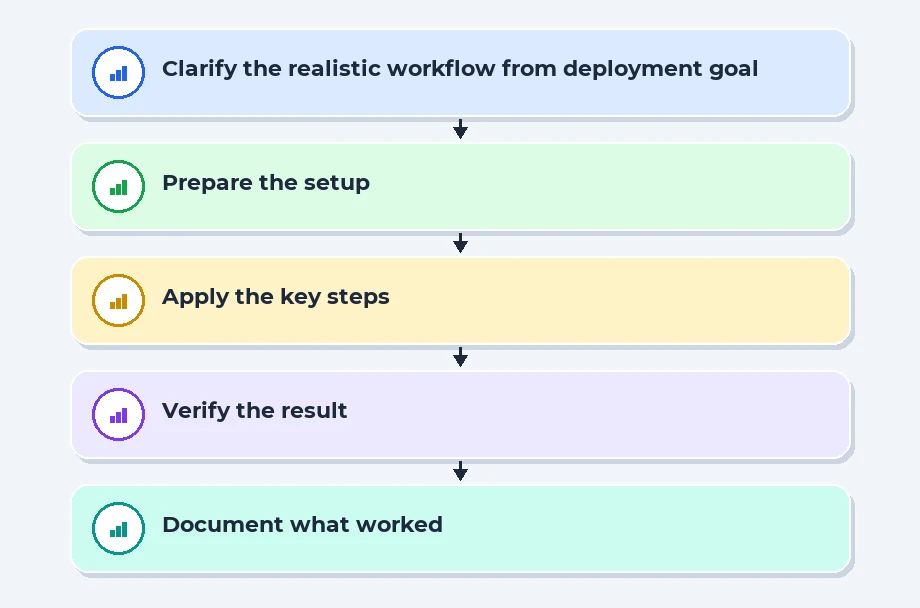
A realistic workflow from PR to deployment with namespaces
Imagine a feature work item in a Bangalore based product team. A developer opens a PR that targets a feature branch in the dev namespace. Automated tests run in that same namespace, and if everything passes the pull request moves forward. A review team checks logs and monitors resource usage to ensure that the new changes do not violate quotas. If all checks pass the feature is promoted to a test namespace for broader validation, and finally to prod when ready. Throughout this flow, namespaces help keep changes isolated and traceable, so the team can quickly identify which environment is impacted by a new deployment.
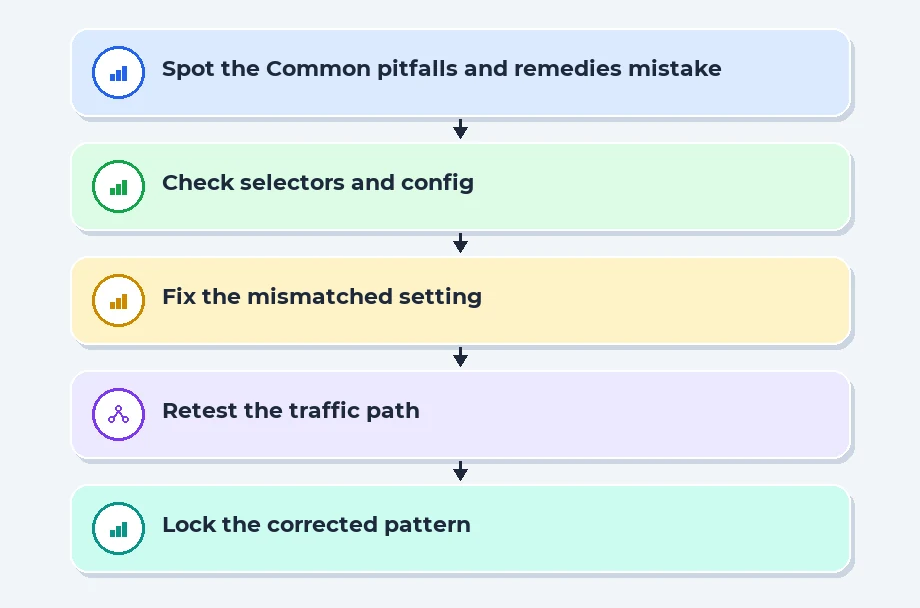
One practical pitfall is assuming that a change in one namespace cannot affect another. In reality, shared services and misconfigured network policies can cause cross‑namespace effects. The cure is to have a clear, automated promotion path and to test cross‑namespace interactions early in the pipeline. This discipline makes a big difference in the reliability of release trains and the confidence of stakeholders evaluating the project during placement interviews or industry readiness assessments.
Common pitfalls and remedies
A frequent mistake is treating namespaces as a substitute for proper security boundaries. They are part of a larger containment strategy that includes network policies and identity management. Another error is over‑scoping quotas to the point of blocking legitimate progress. Start with conservative quotas and adjust based on real usage data. Finally, avoid bending namespace boundaries to force a single team's workflow into a shared space without governance. Clear ownership and documented rules prevent confusion and reduce the risk of mistakes during busy release periods.
Recent Job Descriptions

06. References
Kubernetes Namespaces documentation:Kubernetes Namespaces documentation
Kubernetes labels and annotations guide:Kubernetes labels and annotations guide
Namespaces walkthrough:Namespaces walkthrough
RBAC and IAM best practices for Kubernetes on AWS:RBAC and IAM best practices for Kubernetes on AWS
07. Conclusion
In practice, a thoughtful namespace strategy reduces friction between teams and speeds up delivery. It clarifies ownership, supports disciplined governance, and aligns with the everyday realities of IT work in Bangalore. The right balance of isolation, shared services, and automation helps engineers grow into reliable practitioners who understand how to scale an application safely. As you apply these patterns in real projects, you will gain confidence in your ability to navigate cluster boundaries, collaborate with teammates, and present work that stands up to interviews and placement assessments. In this approach you will learn to reason about namespace boundaries, plan for growth, and communicate effectively with stakeholders.
The practical patterns in this guide become a living playbook you can adapt as projects evolve, from Bangalore startups to larger cloud deployments. As you apply these patterns, you will see teams coordinating more smoothly, incidents decrease, and releases become more predictable. Mastering Kubernetes namespaces is not about clever tricks; it's about building reliable, scalable practices that teams can depend on every day.
Navigate to Address
Scoop Labs
59, 2nd Floor, VLM Towers, 10th Cross Road, 2nd Stage, Padmanabha Nagar, Banashankari, Bengaluru, Karnataka 560070
Get Direction: Banashankari
Submit a Request
Recent Posts


