

Overview: API integration describes how the frontend talks to the backend. This guide explains the real work behind that handshake. You will learn the end to end flow from a frontend request to a backend response, the common patterns teams use, and how to verify the connection in a live project in Banashankari, Bangalore. It is practical and grounded in day to day work.
01. Introduction
In modern teams, the frontend does not stand alone. It talks to the backend through an API layer that fetches data, submits forms, and shows the system's state. In Bengaluru's tech mix, that API layer often spans several services and teams. A strong API integration mindset means designing and validating how the frontend and backend speak to each other. It also means weighing the tradeoffs of patterns and tools you pick.
As a junior contributor, you will see this pattern in real projects. A login screen posts to a login endpoint and returns a token. The token goes into subsequent requests in an Authorization header. Some pages load data in parallel to feel fast. Others need real time updates via streaming or polling. The job isn't just making requests; it's shaping contracts, handling errors gracefully, and keeping security strong without slowing the user down. This article stays practical and concrete, not abstract. It also nods to how hands-on learning paths in local training ecosystems structure real work-projects, mentorship, and placement readiness. If you want a learning path that blends classroom practice with actual projects, a Full Stack MERN track in Bengaluru can help you connect frontend and backend work. Scoop Labs emphasizes hands-on, project-based learning. You'll see real world scenes, not glossy templates. You'll build muscle by doing end-to-end flows, then testing what you've built in a safe environment. The goal here is to help you ship features that rely on solid API contracts and clear error handling.
In this article you'll follow a practical end-to-end flow-from a user action in the browser to a response from the server. You'll learn common patterns, how to test them, and how to spot problems before they reach users. The examples are grounded in daily work you'd encounter in a typical project team in Banashankari or nearby neighborhoods. If you want a learning path that connects classroom practice with real projects and mentorship, keep reading. The material here connects with courses that blend frontend and backend work, with emphasis on hands-on coding and testing. You'll also find links to internal resources and practice tracks that mirror local industry expectations.
Request lifecycle in a typical app
In a common single-page app, a user action starts the flow. A button click or page load prompts an HTTP request to an API. The framework adds headers like Content-Type and Authorization. The browser may run preflight checks for cross-origin requests when needed. The backend route handler validates the token, checks permissions, runs business logic, and returns a structured response. The frontend then uses that data to update the UI or show an error message.
To make this predictable, design the API surface with clear contracts. Document inputs and outputs. Keep backward compatibility in mind for future changes. On the client side, implement a small, predictable error handling strategy. That makes it easier to diagnose issues and to reproduce problems in testing environments. When frontend and backend expectations align, the integration becomes smoother and faster to iterate on in a sprint.
Think about the end-to-end flow as a line of responsibility. The frontend is responsible for user experience and validation, the backend for business rules and data integrity, and any gateway in between for routing and observability. When you model a login flow, you can start with a simple end-to-end contract: authenticate, receive a token, and use that token in later requests to fetch protected data. This tiny scenario makes it easier to reason about errors, latency, and security. It also gives you a baseline to compare more complex flows later on.
In day-to-day work you'll see this pattern in PRs where a teammate adds a new endpoint. The first task is to understand the contract: what endpoint exists, what parameters it accepts, and what it returns. The frontend then updates to call that endpoint in the right places. The backend must meet performance and reliability targets. These steps happen in real projects, often in a sprint with tight deadlines. The more you simulate an end-to-end flow, the more naturally you handle unknowns during production deployments. The practical steps below show a concrete, low-risk way to begin building that muscle.
The practical sequence looks like this. A frontend team member requests a list of items from an endpoint. The backend validates the incoming token, ensures the user has permission, fetches data from a database, and sends back a JSON array. The frontend renders the items and stores the session state for future requests. If something goes wrong, the frontend surfaces a friendly error and logs details for the backend team. The visible outcome is a smooth user experience and a well-defined failure mode that does not leak sensitive information. You'll see these patterns echoed in the examples and use cases later in this article. If you want a structured learning path that mirrors this real-world workflow, a Full Stack Java or MERN course in Banashankari can help you connect front-end work with back-end functionality.
02. Frontend to Backend Flow
In practice you'll encounter a few recurring patterns. First, the frontend must attach proper authentication information. That often means sending a JWT or a session cookie with each request. Second, the payload format is typically JSON. The server validates the payload against a schema and provides a clear status code with data or error details. Third, the backend may use an API gateway or service mesh that adds a layer of routing, rate limiting, and observability. Working in a real project means not only writing code but aligning with the team's API contracts and deployment practices. When you start, model a simple end-to-end flow from a login attempt to loading a protected resource. The simplicity helps you learn faster and reduces confusion during code reviews.
In day-to-day work you'll see this pattern in a PR where a teammate adds a new endpoint. The first step is to understand the contract: what endpoint exists, what parameters it accepts, and what it returns. Then the frontend must be updated to call that endpoint in the right places. The backend then needs to be measured against performance and reliability targets. These steps happen in a real project, often in a sprint with a tight deadline. The more you simulate an end-to-end flow, the more naturally you will handle the unknowns during production deployment. The practical steps below show a concrete, low-risk way to begin building that muscle.
The practical sequence looks like this. A frontend team member requests a list of items from an endpoint. The backend validates the incoming token, ensures the user has permission, fetches data from a database, and sends back a JSON array. The frontend renders the items and stores the session state for future requests. If something goes wrong, the frontend surfaces a friendly error and logs details for the backend team. The visible outcome is a seamless user experience and a well-defined failure mode that does not leak sensitive information. You will see these patterns echoed in the examples and use cases later in this article. If you want a structured, hands-on path that mirrors this real-world workflow, a MERN track in Bengaluru can help you connect frontend and backend work through practical projects.
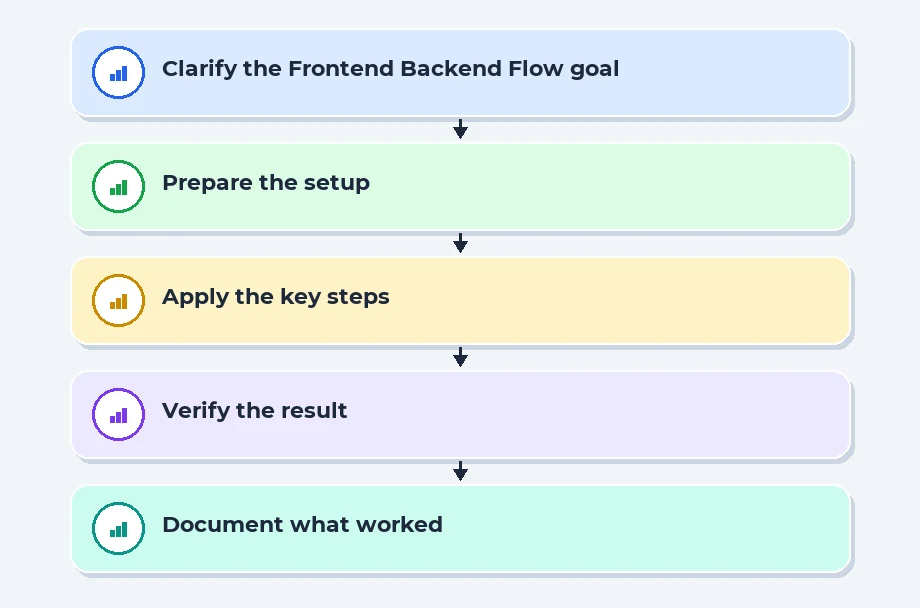
To make this concrete, you should practice a small end-to-end flow: a login call, token receipt, and a protected data fetch. This simple loop gives you a baseline for measuring latency, error handling, and security. It also helps you align with teammates during code reviews and demonstrations. The goal is not to create a perfect mock; it is to build confidence that the flow holds under realistic conditions and is easy to diagnose when something breaks.
Placement Clients


MSME Companies in UK & US
03. API Patterns in Full Stack
Choosing the right API pattern depends on product requirements, team skill, and the architecture in place. Real projects rarely use a single approach. Instead you blend REST for broad compatibility, GraphQL for client-driven data needs, and sometimes gRPC for efficient internal communication. The trick is to know when each shines and how to compose them without adding noise. The guidance here ties decisions to real signals from product needs and team structure.
REST APIs continue to anchor many systems. They map cleanly to resources and rely on standard HTTP semantics. If you need broad client support, simple tooling, and straightforward caching, REST is often a safe starting point. GraphQL gives the client control over fields and depth, which is powerful when data shapes vary or networks are slow. It is especially strong for mobile apps that need precise data with fewer round trips. gRPC offers another path for internal services that demand low latency and strict contracts, especially in polyglot microservice environments where language and platform diversity exist.
In practice, real projects blend these approaches. A public web API might be RESTful for compatibility, while internal services use gRPC for speed. Frontend apps that require tailor-made data can use GraphQL for the client side, while the edge services layer remains RESTful for easy gateway support. This mix reduces duplication and keeps testing, deployment, and observability manageable. If you want a practical path that covers patterns end to end, a Full Stack Java or MERN track often includes modules that map to these choices and their consequences. You might also explore a DevOps track to see how deployment patterns shape API behavior in production, or the Testing track to learn how to validate contracts across patterns.
REST API in practice
REST works well when your data naturally maps to resources. You design endpoints around nouns, use standard HTTP methods, and rely on status codes to convey outcomes. In a typical project you'll define a small number of stable resources and expose versioned endpoints to allow evolution without breaking clients. REST also makes caching straightforward because HTTP has built-in mechanisms for this purpose.
When you work with REST, define clear input and output schemas and document them with tools like OpenAPI. The contract becomes the single source of truth for frontend and backend teams. In Bengaluru's tech companies, many teams expect this contract before UI work begins. This approach reduces rework during sprints and improves alignment across the team. If you want hands-on practice, pair this with a course path that covers the full stack
GraphQL for flexible clients
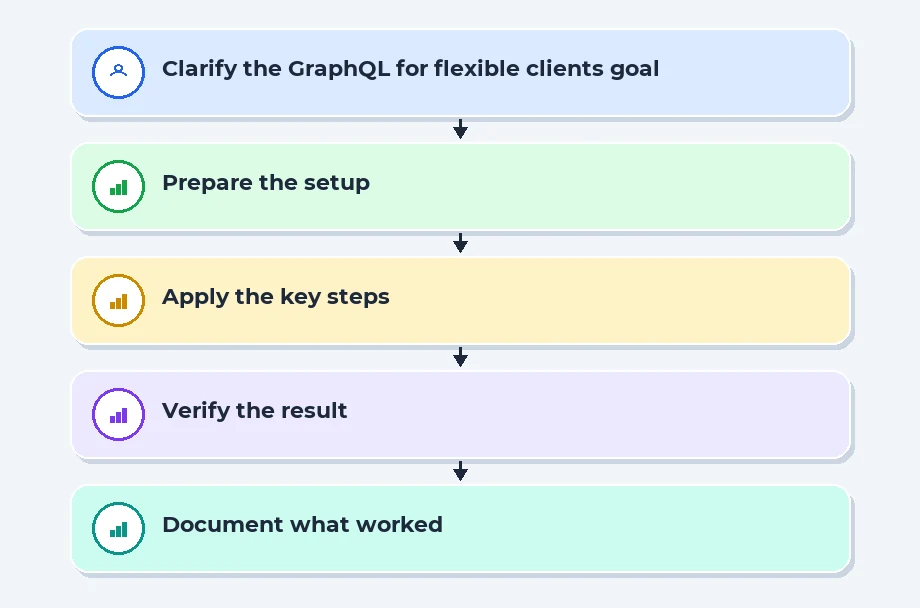
GraphQL shines when the client needs to tailor responses to show only what is necessary. It helps reduce over-fetch and under-fetch, and it can simplify complex data graphs that would require multiple REST calls. On real projects GraphQL often becomes the gateway for mobile apps with data shape needs. It also provides a single endpoint, which can simplify monitoring and access control, though the server side becomes more complex to implement and maintain.
In practice you set up a server schema, expose a resolver map, and provide tooling to inspect queries. Frontend developers can request exactly what they need, which improves performance and reduces data transfer. The tradeoff is a steeper learning curve and more sophisticated server infrastructure. If your team is just starting out, you may prefer REST and only introduce GraphQL when data needs justify the added complexity. When considering GraphQL, ensure strong typing, careful schema design, and solid testing practices. For career-oriented learners this direction often aligns with product backlogs that require rapid UI iteration and flexible data access, making it popular in contemporary full-stack tracks in Bengaluru.
gRPC in internal services
gRPC uses a binary protocol and Protocol Buffers to deliver efficient payloads with strong typing. It shines in high-performance, low-latency environments where many services communicate with each other. In practice teams use gRPC for internal service calls rather than public web APIs, because browser support is limited and bridging requires extra work. It works well in polyglot environments where services are written in different languages and you need a well-defined contract at scale.
Operationally you define services in proto files, generate client and server stubs, and deploy an environment that supports service discovery and load balancing. Observability becomes crucial since tracing and metrics must cover inter-service calls. As a beginner you should start with a simple gRPC service and compare its ergonomics with REST for a given use case. That helps you spot the right moment to apply gRPC in a real project and avoid premature complexity.
| Feature | REST | GraphQL | gRPC |
|---|---|---|---|
| Typing | Loose JSON schemas | Strong typing via GraphQL SDL | Protobuf based strongly typed |
| Payload size | Typically larger due to metadata | Client selects fields reduce payload | Efficient binary payload |
| Caching | HTTP caching straightforward | Fragment caching less universal | Streaming support |
| Tooling | Wide support, OpenAPI | GraphiQL, Apollo tooling | grpcurl, Protobuf tooling |
04. Testing API Integration
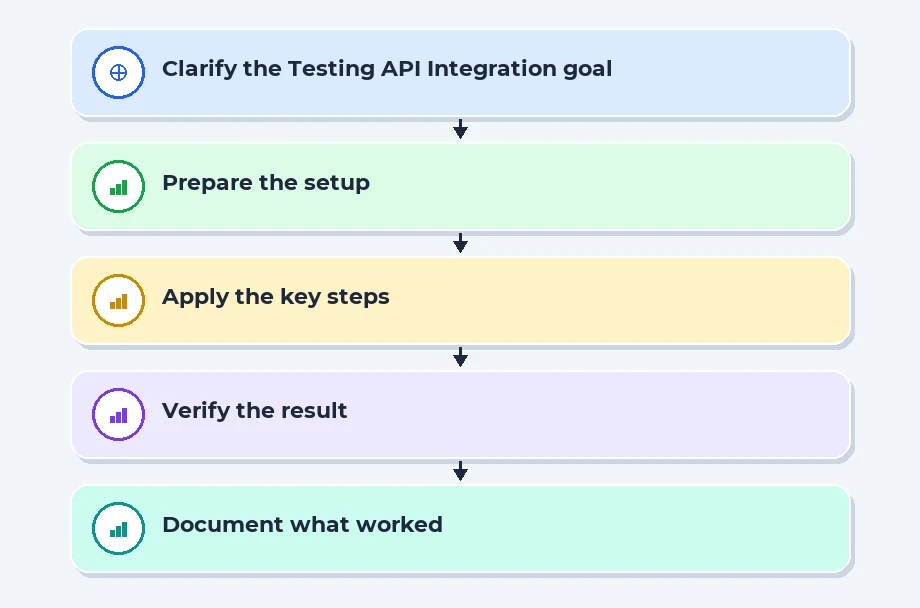
Testing API integration means validating both the contract and the behavior of endpoints under real-world conditions. You want to isolate components while ensuring the system as a whole behaves as expected. In practice you begin with unit tests for individual endpoints and services, then add contract tests to ensure the API surface remains compatible as teams evolve the backend. Finally you run end-to-end tests that exercise the entire flow from the frontend to the final UI state.
Unit tests verify the endpoint logic with controlled inputs. They mock external dependencies like databases or other services so the test focuses on the unit itself. Contract tests use a shared contract to ensure that clients and servers agree on inputs and outputs. OpenAPI specifications can serve as living contracts that teams update as the API evolves. End-to-end tests simulate real user journeys, using a staging environment that mirrors production as closely as possible. The discipline here is to test early and test often, keeping test data representative and tests reliable across deployments.
In practice you will combine tools that fit your stack. For Java teams, you might use JUnit with REST-assured for endpoint checks. In Python ecosystems, PyTest with requests or httpx works well. For frontend focused testing, integration tests in frameworks like Cypress verify user flows that reach multiple API calls. The goal is to detect regressions before they reach users and to catch contracts drifting away from reality through automated tests and continuous feedback in your pipeline.
05. Rest vs GraphQL in Practice
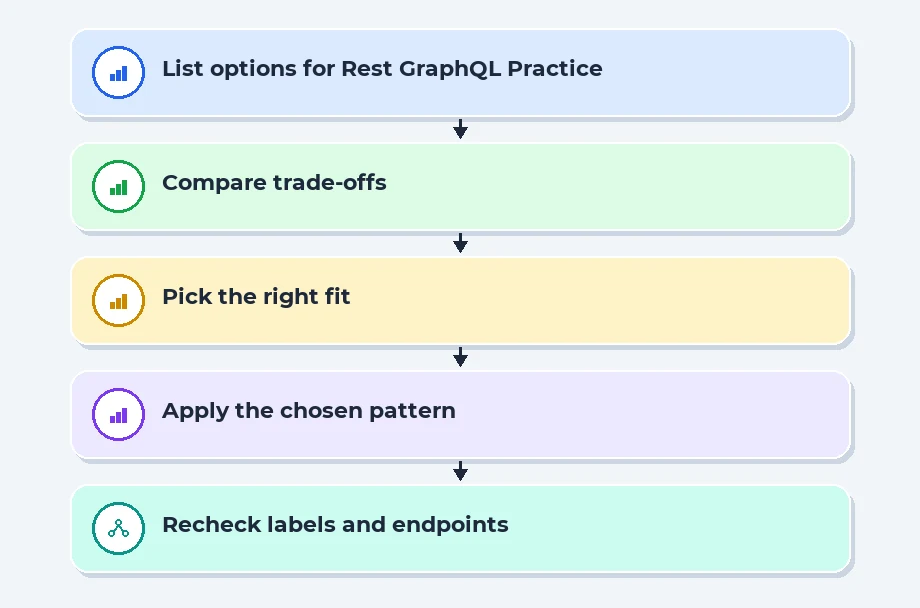
Choosing between REST and GraphQL hinges on data needs, client diversity, and team maturity. REST remains a safe default when you want clear boundaries, predictable caching, and straightforward tooling. GraphQL pays off when a client repeatedly requests different data shapes or when you need to reduce the number of round trips, especially on mobile networks. In production you rarely select one approach in isolation; you typically combine patterns to suit each service boundary and client type.
Recent Job Descriptions

06. References
07. Conclusion
API integration is a practical craft. It requires clear contracts, careful testing, and thoughtful security. By following the end-to-end flow from frontend requests to backend responses, and by choosing patterns that fit the product, you can build systems that are reliable and scalable. The Bengaluru job market rewards hands-on learning, project-based implementation, and the ability to reason about trade-offs under real-world pressure. The learning path you choose should connect classroom practice with project work and placement preparation, turning theory into confident, hireable skills. A structured track that blends frontend and backend work with mentorship and real-world coding exposure will help you grow faster and land the opportunities you want. This approach mirrors the practical, mentorship-driven ethos seen in many local training ecosystems. And it aligns with how teams in Banashankari and across Bengaluru collaborate to deliver value to users.
For those who want to pursue a structured path that connects theory to practice, consider the broader ecosystem of courses that integrate Full Stack development with Gen AI, testing measures, and deployment practices. A well-designed program will emphasize real projects, classroom learning, and placement readiness. It can be the bridge from student to junior professional, especially when you build a portfolio of API-driven features, automated tests, and deployment workflows. The road ahead becomes clear when you start with solid API integration basics, keep testing your assumptions, and practice the kind of disciplined, mistake-free work that recruiters look for in Bangalore tech hubs. This way your first year as a developer focuses on getting things right the first time, rather than fixing avoidable problems after go-live.
Navigate to Address
Scoop Labs
59, 2nd Floor, VLM Towers, 10th Cross Road, 2nd Stage, Padmanabha Nagar, Banashankari, Bengaluru, Karnataka 560070
Get Direction: Banashankari
Submit a Request
Recent Posts


