

Overview: Understanding common software project mistakes and how to avoid them helps engineering teams deliver stable systems on time without burning out. Many software builds collapse because of vague requirements, weak architectural choices, or rushed testing cycles. This guide explains these real workplace traps in plain English and gives you practical steps to protect your codebase, your team, and your delivery schedule.
01. Introduction
Software delivery often looks predictable on paper. A client shares a vision, the product owner drafts user stories, developers write code, and the testing team signs off before production deployment. In real workplace settings, however, projects run into sudden blockers that cause missed deadlines, ballooning budgets, and frustrated engineering teams.
Industry research shows that a major share of technical initiatives struggle not because the engineers lack programming knowledge, but because the software development process breaks down across planning, communication, and quality controls. A junior developer might assume that project failure stems entirely from deep code bugs, yet the actual source is frequently an unverified assumption made during sprint zero.
Whether you work in a product startup or an established enterprise in Bangalore, mastering software project management principles is just as critical as writing clean logic. When you understand why software initiatives drift off course, you can spot early warning signals during sprint standups, architectural reviews, and staging releases long before customers encounter downtime.
02. Why Do Software Projects Fail During Early Scope Definition?
Every software initiative begins with an idea, but vague ideas make terrible foundations for technical project planning. When teams rush into implementation without establishing clear boundaries, they build features based on speculation rather than confirmed operational needs.
This early disconnect between what business stakeholders picture and what engineers construct creates friction that compounds with every two-week sprint cycle.
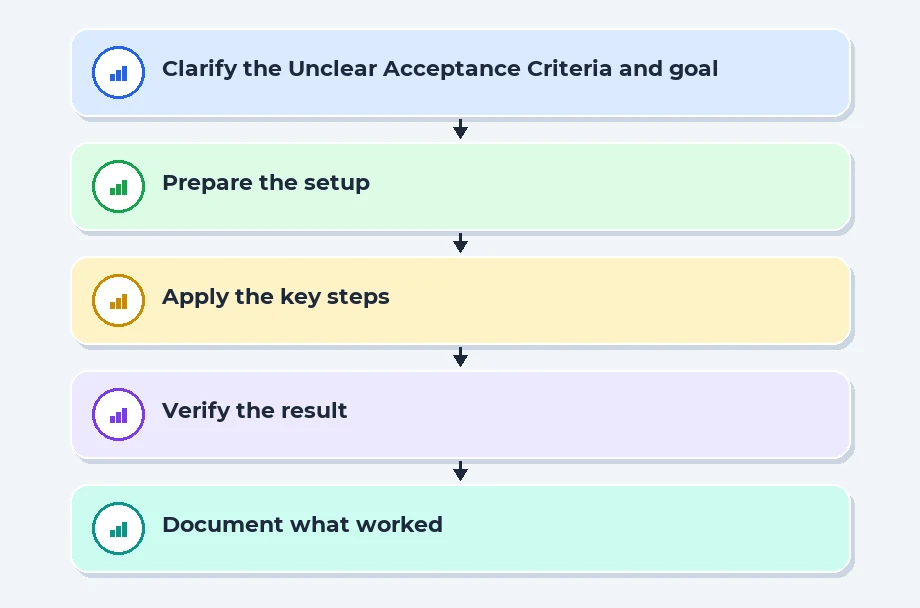
Unclear Acceptance Criteria and Ambiguous User Stories
User stories written without strict acceptance criteria leave developers guessing how a feature should behave when edge cases appear. A story that simply asks for user authentication sounds easy on the surface, yet it fails to specify session duration limits, rate limits, multi-device login rules, or password reset edge cases.
When engineers implement their own assumptions, testing engineers write test cases based on a different interpretation, which causes endless bug-reopen loops during sprint verification. Clear stories require explicit conditions of satisfaction written in concrete language, thereby preventing subjective debates during sprint reviews.
Teams that practice disciplined agile methodology address this problem by writing stories that include both happy paths and failure scenarios before developers pick tickets from the sprint backlog.
The Hidden Trap of Feature Creep Without Trade-Off Analysis
Feature creep occurs when new functional requests slip into an active milestone without adjusting deadlines, team capacity, or available budget. A product manager might agree to minor client requests during casual status calls, assuming that small user interface tweaks take minimal engineering effort.
In practice, every small modification alters database schemas, background workers, integration test suites, and regression testing pipelines. Without formal change impact analysis, these incremental requests pile up until the scheduled release date arrives with half-finished features scattered across multiple feature branches.
Protecting a release requires teams to practice trade-off negotiation. Whenever a new feature enters the current scope, an equivalent amount of non-essential work must move out to the product backlog for future consideration.
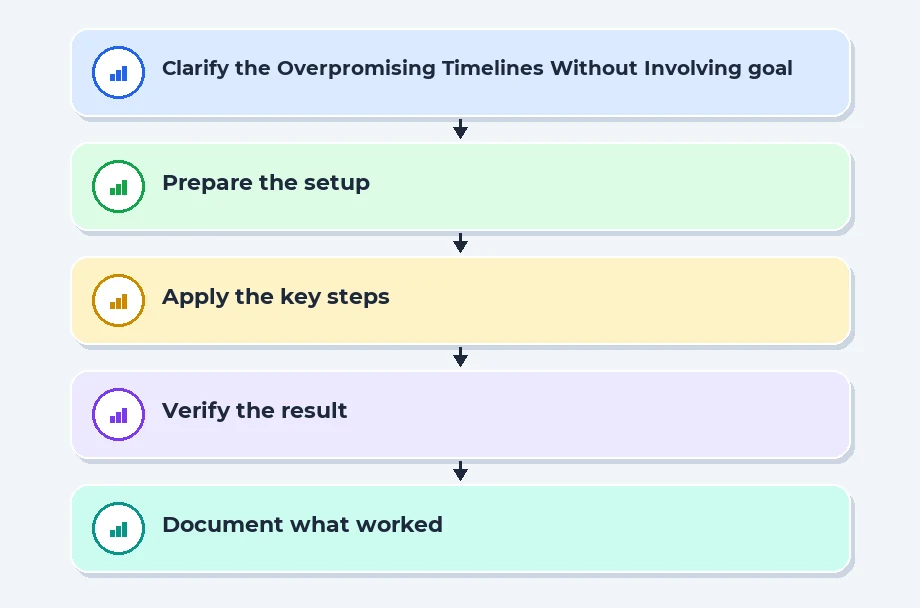
Overpromising Timelines Without Involving Core Engineering Teams
Project schedules created entirely by sales executives or business managers without consulting the hands-on engineering team produce unrealistic deadlines from the first day. Business leaders often estimate software tasks based on the absolute best-case scenario where no third-party API breaks, no environment issues occur, and every integration works on the first try.
Real-world engineering involves debugging legacy dependencies, resolving merge conflicts, setting up deployment environments, and handling infrastructure provisioning delays. When timelines omit these operational realities, developers face immense pressure to skip code reviews, bypass documentation, and abandon automated unit testing.
Senior teams avoid this trap by using relative sizing estimation techniques, including planning poker and story point calibrations, while incorporating junior and senior perspectives before committing to milestone delivery dates.
Placement Clients


MSME Companies in UK & US
03. How Does Poor Technical Planning and Architecture Break Delivery?
Technical architecture decisions made in haste create stubborn technical debt that slows development velocity to a crawl within months. When developers choose technologies based on online hype rather than actual project requirements, the system becomes fragile, difficult to debug, and costly to scale.
A balanced system architecture matches the team's current expertise, the anticipated workload volume, and the maintenance capability of the organization over a three-to-five-year horizon.
Premature Optimization and Over-Engineering Initial Releases
Junior engineers and eager architects often build distributed microservices, message queues, and complex caching clusters for systems that only serve a few hundred daily transactions. This premature optimization introduces complex operational overhead, including distributed tracing needs, network latency concerns, eventual consistency bugs, and complicated local development environments.
A well-structured modular monolith is almost always the right starting pattern for an early-stage software application. Building a simpler system allows the team to understand domain boundaries, validate product-market fit, and deploy updates quickly without managing container orchestration clusters across multiple environments.
Teams should introduce distributed infrastructure patterns only when actual performance metrics and profile logs demonstrate that a single database or process cannot sustain the load.
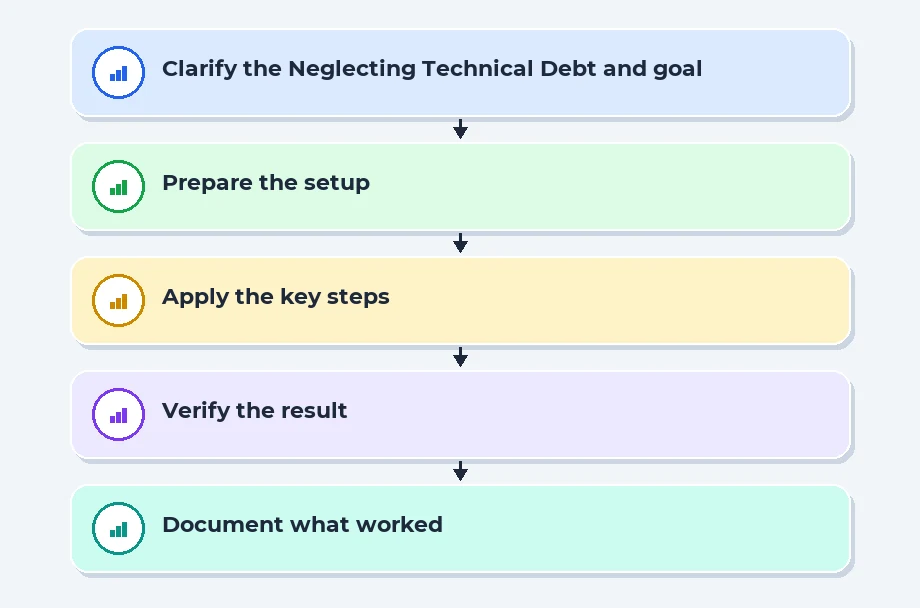
Neglecting Technical Debt and Accumulating Invisible Code Liabilities
Cutting corners to hit an artificial delivery date creates technical debt that acts like high-interest credit card debt inside your codebase. Hardcoding configuration strings, duplicating business logic across components, and avoiding database indexing might save an hour today, but these choices cause catastrophic performance degradations later.
As technical debt accumulates, making even simple UI updates or adding a new database field breaks unrelated modules across the platform. The team spends eighty percent of every sprint troubleshooting regressions instead of delivering meaningful product improvements to end users.
Engineering managers must allocate twenty to thirty percent of each development cycle toward refactoring legacy modules, updating third-party libraries, and writing automated regression coverage to keep code health sustainable.
Comparing Upfront Architecture Against Iterative Refactoring
Teams often debate whether to design every detail upfront before writing code or to start coding immediately and adjust the architecture as the application evolves. The table below compares these two technical project planning mindsets across key delivery parameters.
| Planning Dimension | Heavy Upfront Big Design | Iterative Architectural Evolution | Balanced Pragmatic Engineering |
|---|---|---|---|
| Requirement Adaptability | Very rigid and resistant to mid-cycle business changes | Highly flexible but risks chaotic structural sprawl | Structured modular core that evolves with validated changes |
| Early Delivery Velocity | Slow because teams spend months producing design blueprints | Fast initial progress that often slows down later due to messy code | Steady sustainable pace backed by automated verification |
| Risk of Over-Engineering | Extremely high due to unvalidated assumptions about future scale | Low initially, but creates technical debt without regular audits | Moderate because complexity requires data-driven justification |
| Maintenance Burden | High maintenance on obsolete documentation and unused abstractions | High maintenance caused by duplicated logic and inconsistent layers | Manageable maintenance supported by living documentation and clean tests |
Pragmatic engineering teams choose the balanced approach, creating clear component interfaces and solid data models while leaving specific implementation details open to iterative improvement based on real user feedback.
04. Why Do Testing and Deployment Shortcuts Cause Production Failures?
Testing is frequently treated as an afterthought that occurs only when development has concluded, which guarantees high stress and unstable releases. When quality checks are pushed to the end of a milestone, finding a fundamental design flaw forces developers to rewrite extensive blocks of application code.
A mature software development process embeds quality verification directly into daily developer workflows rather than relying on manual gatekeepers right before production launches.
Leaving Quality Assurance to the Final Days of the Sprint
The anti-pattern known as mini-waterfall inside agile sprints happens when developers spend nine days coding and hand off ten major tickets to the testing engineer on the final afternoon of the sprint. The testing engineer cannot perform deep functional testing, API payload validation, and performance tests within a few remaining working hours.
Consequently, obvious defects leak directly into production servers where end users encounter broken forms, payment failures, and unresponsive interfaces. Testing must occur continuously alongside coding, with developers creating unit tests and integration tests while writing their implementation logic.
Adopting shift-left testing practices ensures that software testers review user story criteria early, automate critical verification workflows, and guide developers toward building testable code modules.
Missing Continuous Integration and Automated Build Verification
Relying on manual code packaging and developer-driven local deployments creates inconsistent environments where software works on one laptop but crashes in staging. Without an automated Continuous Integration pipeline, merge conflicts linger unnoticed in remote branches for weeks, causing painful integration sessions known as merge hell.
Every pull request must trigger automated linting, test suite execution, security dependency scans, and container image builds before any engineer merges code into the main branch. Automated build pipelines provide immediate feedback to developers within minutes of pushing commits, identifying broken contracts before other teammates pull the latest changes.
Investing in reliable build automation reduces deployment anxiety, transforming releases from high-stakes late-night crises into calm, routine non-events during regular business hours.
Ignoring Monitoring, Observability, and Error Tracking in Staging
Deploying application code without structured logging, centralized metrics, and real-time error tracking leaves teams blind when production incidents occur. Many software teams discover system crashes only when angry users post complaints on social media or file support tickets with customer care.
A production-ready release must include health check endpoints, database query performance trackers, structured JSON application logs, and automated alerting rules. Monitoring must be tested in staging environments under simulated user load so developers know exactly how dashboards behave when background queues experience backpressure.
Observability allows on-call engineers to pinpoint whether an incident originates from a third-party payment gateway timeout, an unindexed database query, or an out-of-memory container crash within seconds.
05. How Can Modern Engineering Teams Prevent Recurring Delivery Mistakes?
Preventing software delivery failures requires cultural discipline, transparent operational processes, and continuous technical upskilling. Rather than blaming individual developers when things go wrong, successful engineering organizations build safety guardrails into their everyday workflows.
These practices allow teams to identify deviations early, communicate risks without fear, and maintain steady delivery velocity across demanding client roadmaps.
Establishing Cross-Functional Backlog Refinement Rituals
Backlog refinement is not a status update meeting; it is an active technical discovery workshop where developers, designers, product owners, and QA engineers dissect requirements together. Bringing diverse roles into the same room reveals hidden integration blindspots before a single line of application code is scheduled into a sprint.
During these sessions, engineers question data retention rules, latency expectations, error display patterns, and integration dependencies with external services. Resolving these questions early prevents expensive mid-sprint pivots and ensures that the entire squad shares an identical understanding of what done actually means.
Disciplined refinement sessions produce smaller, self-contained user stories that can easily move from development to testing and production within three to four working days.
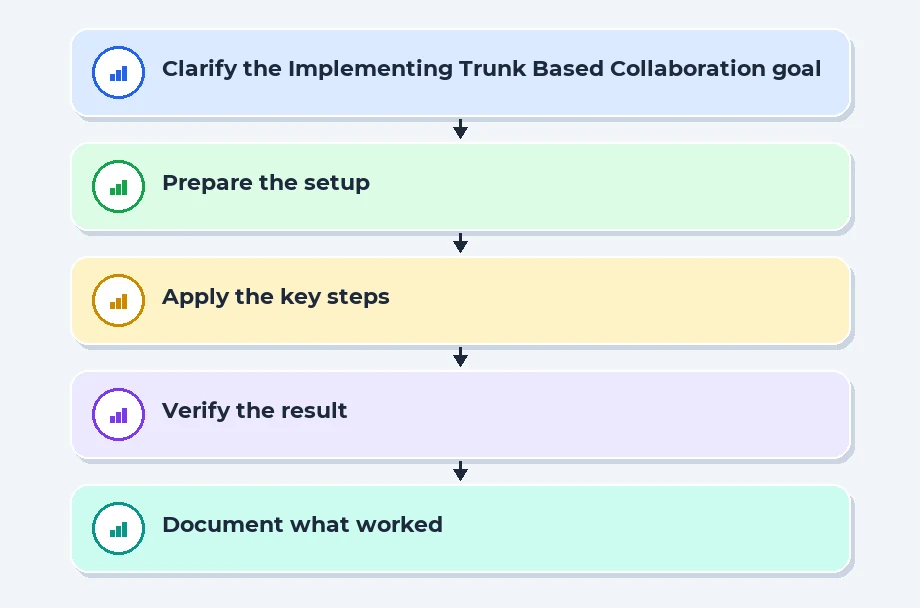
Implementing Trunk-Based Collaboration and Fast Code Reviews
Long-lived feature branches that sit open for three weeks create massive code review backlogs and high-friction merge conflicts. When pull requests contain thousands of lines of modified code, peer reviewers experience review fatigue and simply approve changes with superficial glances.
Modern engineering teams use trunk-based development supported by feature flags, merging small pull requests consisting of no more than two to three hundred lines of code several times per day. Smaller pull requests make code reviews thorough, educational, and quick to complete, allowing teams to catch logical flaws, security vulnerabilities, and design inconsistencies immediately.
Feature flags give teams the power to merge unfinished functionality safely into the main codebase while hiding it from production users until the complete capability passes full verification.
Bridging Practical Skill Gaps Through Classroom Training and Mentorship
Many project delivery failures happen simply because team members were never trained on production-grade engineering workflows, modern test frameworks, or cloud deployments. Theoretical knowledge gained from short tutorials rarely prepares a junior software engineer for git conflict resolutions, live system debugging, or multi-tenant database designs.
During hands-on lab sessions at Scoop Labs in Banashankari, Bangalore, students experience this directly by simulating real production sprint pressures, resolving continuous integration bottlenecks, and building full-stack applications with industry-standard patterns. Aspiring engineers who participate in dedicated project-based learning understand how clean coding standards, test automation, and systematic architecture planning prevent real project disasters.
Investing in structured technical upskilling ensures that your development squads write maintainable code, communicate trade-offs effectively during sprint planning, and meet recruiter expectations across modern tech companies.
Engineers looking to strengthen their technical execution can explore structured curricula covering modern software paradigms:
- Master full-stack application architecture and modern backend designs through the comprehensive Full Stack MERN Course.
- Build resilient deployment pipelines and cloud automation workflows by enrolling in the industry-aligned DevOps Course.
- Learn automated regression testing, API verification, and performance profiling via the focused Software Testing Training.
- Accelerate your software engineering career with personalized resume reviews and interview preparation through our Placement Support ecosystem.
- Discover our complete range of technology specializations on the Courses Hub or speak with an advisor through Contact Us.
Recent Job Descriptions

06. References
GitHub Docs - About merge conflicts:GitHub Docs - About merge conflicts
git-merge documentation:git-merge documentation
07. Conclusion
Software project failure is rarely an unpredictable accident. It is almost always the visible outcome of unverified requirements, premature architectural complexity, skipped test automation, and silent communication barriers that build up over many sprints. When engineering teams recognize these patterns early, they can establish practical habits that safeguard their delivery milestones.
Building high-quality systems requires continuous discipline rather than heroic late-night troubleshooting. By conducting thorough refinement meetings, deploying code through automated integration pipelines, breaking tasks into small manageable units, and investing in team mentorship, engineering organizations can deliver reliable software that users trust while maintaining healthy, sustainable team morale.
Navigate to Address
Scoop Labs
59, 2nd Floor, VLM Towers, 10th Cross Road, 2nd Stage, Padmanabha Nagar, Banashankari, Bengaluru, Karnataka 560070
Get Direction: Banashankari
Submit a Request
Recent Posts


